Is SLSA Biodegradable?
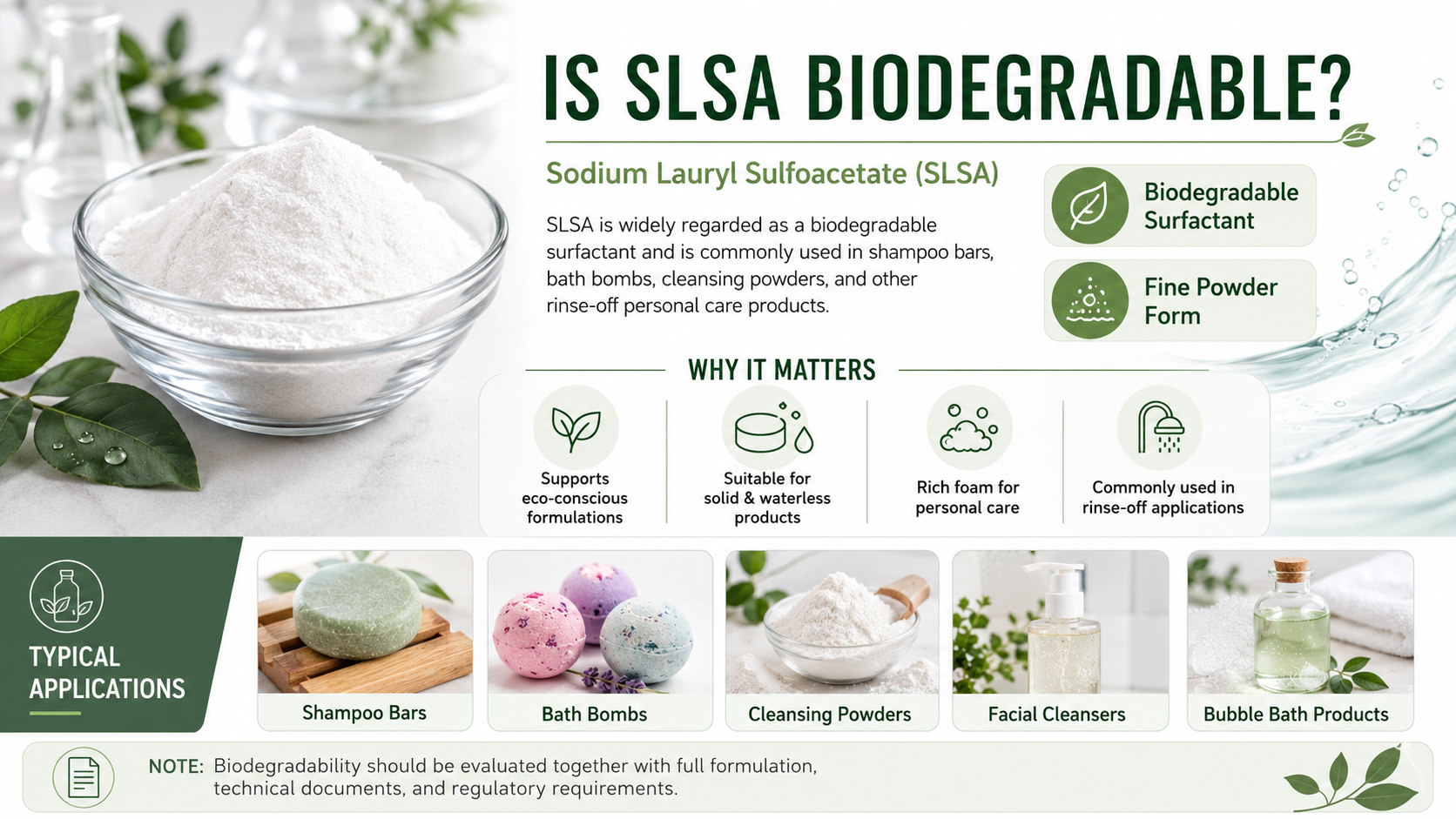
Yes. Sodium Lauryl Sulfoacetate, commonly known as SLSA, is generally recognized as a biodegradable surfactant and is often described as readily biodegradable in supplier and technical documentation.
For personal care brands, this makes SLSA a useful ingredient when developing cleansing products with a more environmentally conscious positioning, especially in solid, powder-based, and waterless personal care formats.
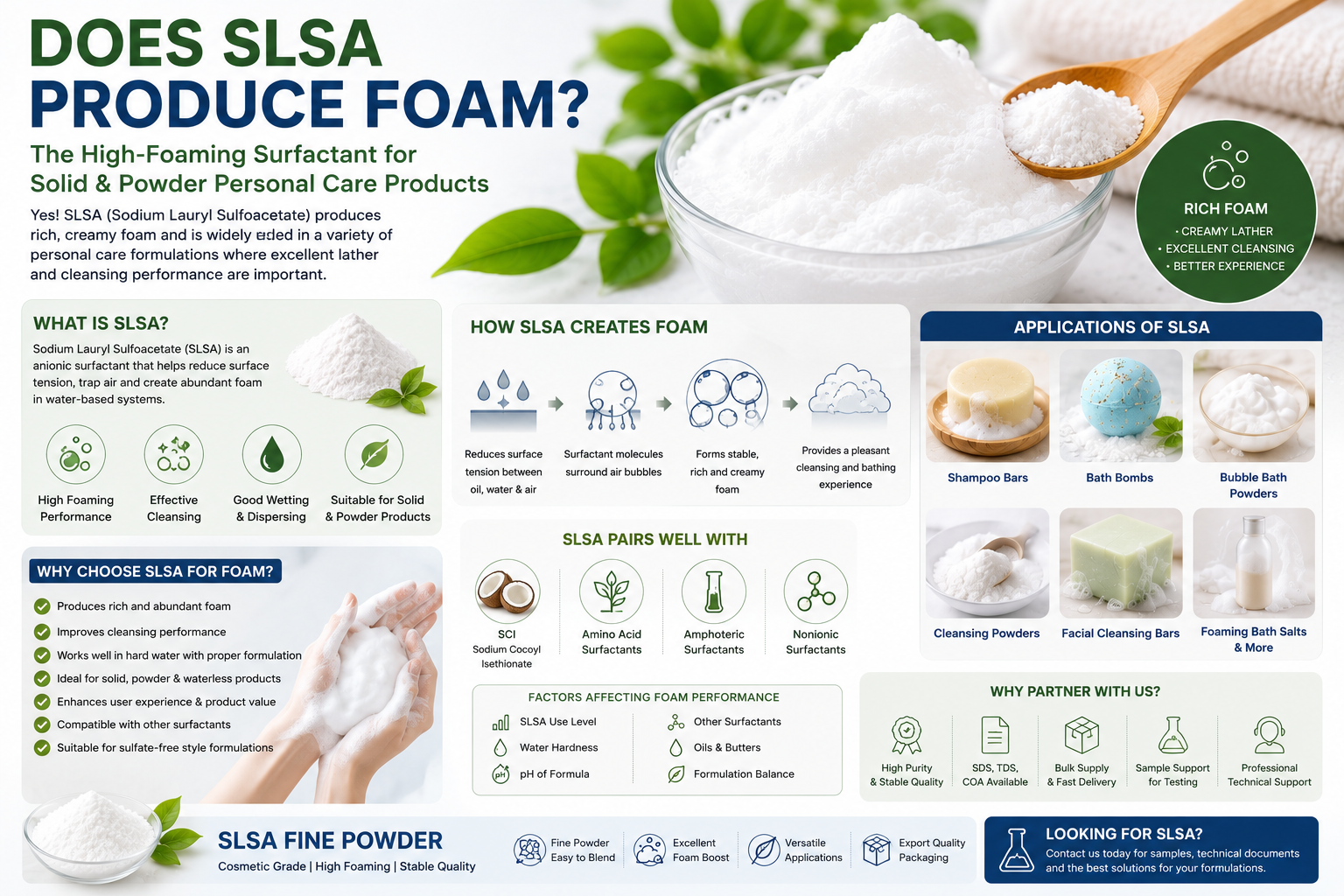
SLSA is widely used in:
- Shampoo bars
- Bath bombs
- Bubble bath powders
- Foaming bath salts
- Cleansing powders
- Solid facial cleansers
- Body cleansing bars
- Waterless personal care products
However, it is important to understand that “biodegradable” does not automatically mean that a finished cosmetic product has no environmental impact. The complete formulation, use level, rinse-off behavior, wastewater treatment conditions, packaging, and regional regulatory requirements should all be considered.
What Does “Biodegradable” Mean for a Surfactant?
For a surfactant, biodegradability means that microorganisms can break down the substance under suitable environmental conditions.
In personal care, this is especially important for rinse-off products such as shampoos, cleansers, body washes, bath products, and facial cleansing products. After use, these ingredients are usually rinsed away with water and enter wastewater systems.
A biodegradable surfactant is generally preferred because it is expected to break down more easily than persistent substances.
However, biodegradability depends on several factors:
- Test method
- Test conditions
- Concentration
- Microbial activity
- Temperature
- Oxygen availability
- Wastewater treatment conditions
- Complete formulation composition
This is why professional buyers often ask suppliers for SDS, TDS, COA, and biodegradability statements when evaluating SLSA for commercial production.
What Does “Readily Biodegradable” Mean?
“Readily biodegradable” is a more specific term than simply “biodegradable.”
It usually means that a substance can pass recognized screening tests for biodegradation under defined laboratory conditions. These tests are designed to evaluate whether a chemical can be rapidly and ultimately degraded by microorganisms in an aerobic aqueous environment.
Common test methods for ready biodegradability include OECD 301 series tests and OECD 310. These methods are widely used in chemical safety and environmental assessment.
For B2B buyers, this means that if a supplier states that SLSA is readily biodegradable, it is reasonable to ask:
- Which test method was used?
- What was the degradation result?
- Was the test based on primary biodegradation or ultimate biodegradation?
- Is a biodegradability statement available?
- Is the statement based on the supplier’s own testing or third-party data?
- Can the supplier provide supporting documentation?
This helps ensure that environmental claims are properly supported.
Why Is Biodegradability Important for Personal Care Brands?
Biodegradability is becoming increasingly important in personal care product development. Consumers, brands, retailers, and distributors are paying more attention to the environmental profile of ingredients, especially in rinse-off products.
For personal care brands, choosing biodegradable surfactants can support product positioning related to:
- Eco-conscious personal care
- Waterless beauty
- Solid shampoo bars
- Plastic-free product formats
- Natural-style bath products
- Mild cleansing systems
- Responsible ingredient selection
- Sustainable product development
SLSA is often selected because it offers both strong foaming performance and a more favorable environmental positioning compared with some traditional surfactant systems.
Is SLSA Eco-Friendly?
SLSA can be a good choice for eco-conscious formulations, especially when used in solid and waterless personal care products.
It supports several modern formulation trends:
1. Waterless Beauty
SLSA fine powder is suitable for waterless products such as shampoo bars, cleansing powders, and solid facial cleansers. These formats can help reduce water content in finished products and may support more compact packaging.
2. Solid Personal Care Products
SLSA works well in shampoo bars, bath bombs, foaming bath salts, and solid cleansers. These products often use less plastic packaging compared with traditional liquid products.
3. Rich Foam Without Traditional Liquid Sulfate Systems
SLSA helps create rich foam in dry and solid formulations. This allows brands to develop high-foaming products without relying on traditional liquid surfactant systems.
4. Biodegradable Surfactant Positioning
Because SLSA is commonly described as biodegradable or readily biodegradable in technical and supplier documentation, it can support a more environmentally responsible ingredient story.
That said, brands should avoid making exaggerated claims. It is better to use clear and accurate wording such as:
- “Formulated with biodegradable surfactants”
- “Contains Sodium Lauryl Sulfoacetate, a biodegradable surfactant”
- “Suitable for solid and waterless personal care formulations”
- “Designed for rinse-off personal care applications”
Claims should always be checked according to the full formula and local regulations.
Is Biodegradable the Same as Natural?
No. Biodegradable and natural are not the same thing.
A biodegradable ingredient can be broken down by microorganisms under suitable conditions. A natural ingredient usually refers to the origin of the raw material.
For SLSA, buyers may see terms such as:
- Naturally derived
- Plant-derived
- Bio-based
- Biodegradable
- Readily biodegradable
- Sulfate-free
- EO/PO-free
These terms are related, but they do not mean exactly the same thing.
For example:
| Claim |
Meaning |
| Biodegradable |
Can be broken down by microorganisms under suitable conditions |
| Readily biodegradable |
Passes defined biodegradation screening criteria |
| Naturally derived |
Made from raw materials of natural origin through chemical processing |
| Bio-based |
Contains carbon derived from biological sources |
| Sulfate-free |
Does not contain sulfate-type surfactant structure |
| EO/PO-free |
Does not use ethoxylated or propoxylated groups |
For accurate product communication, brands should confirm which claims are supported by supplier documents.
Why SLSA Is Popular in Eco-Conscious Personal Care Products
SLSA is popular because it combines good foaming performance with compatibility in modern product formats.
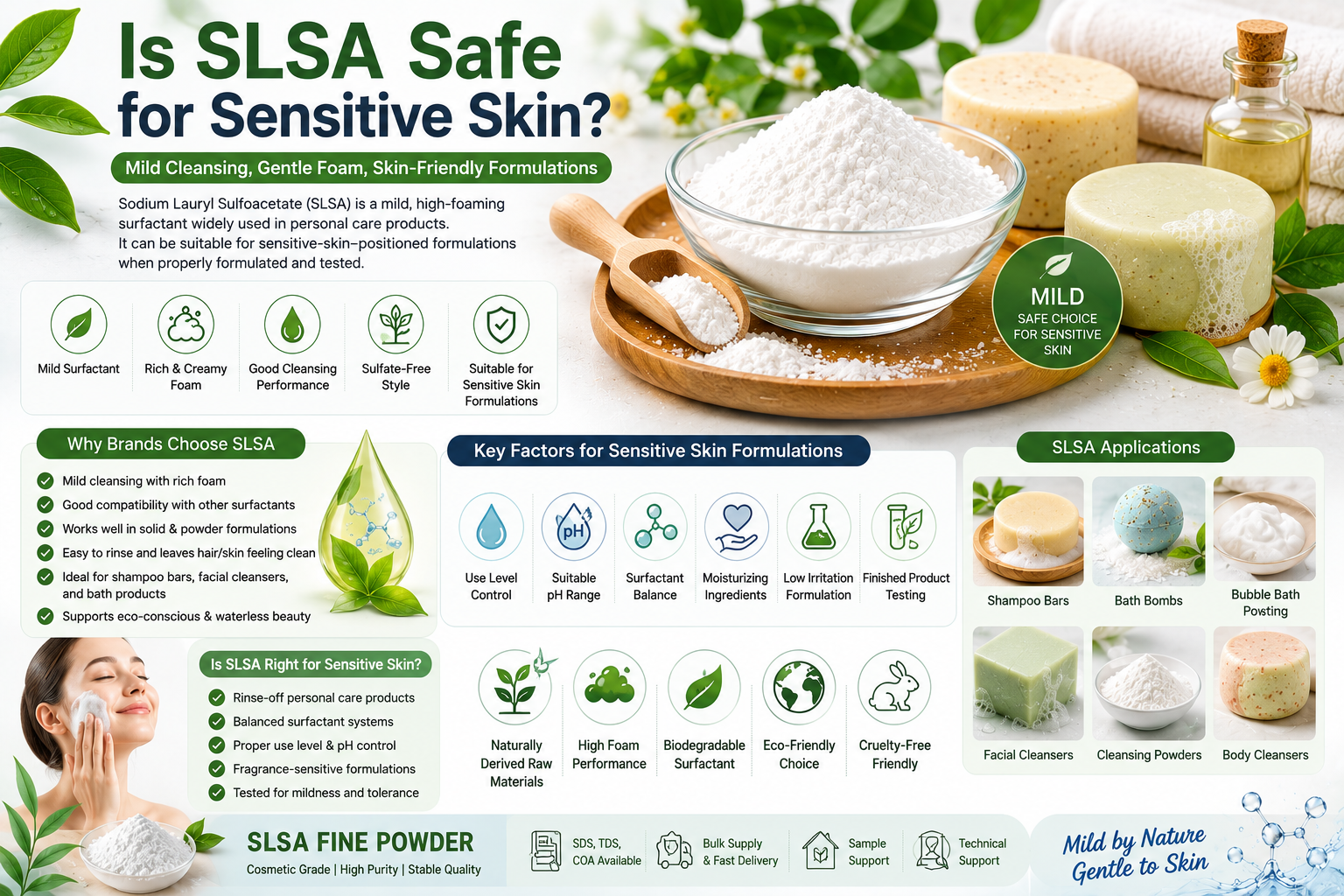
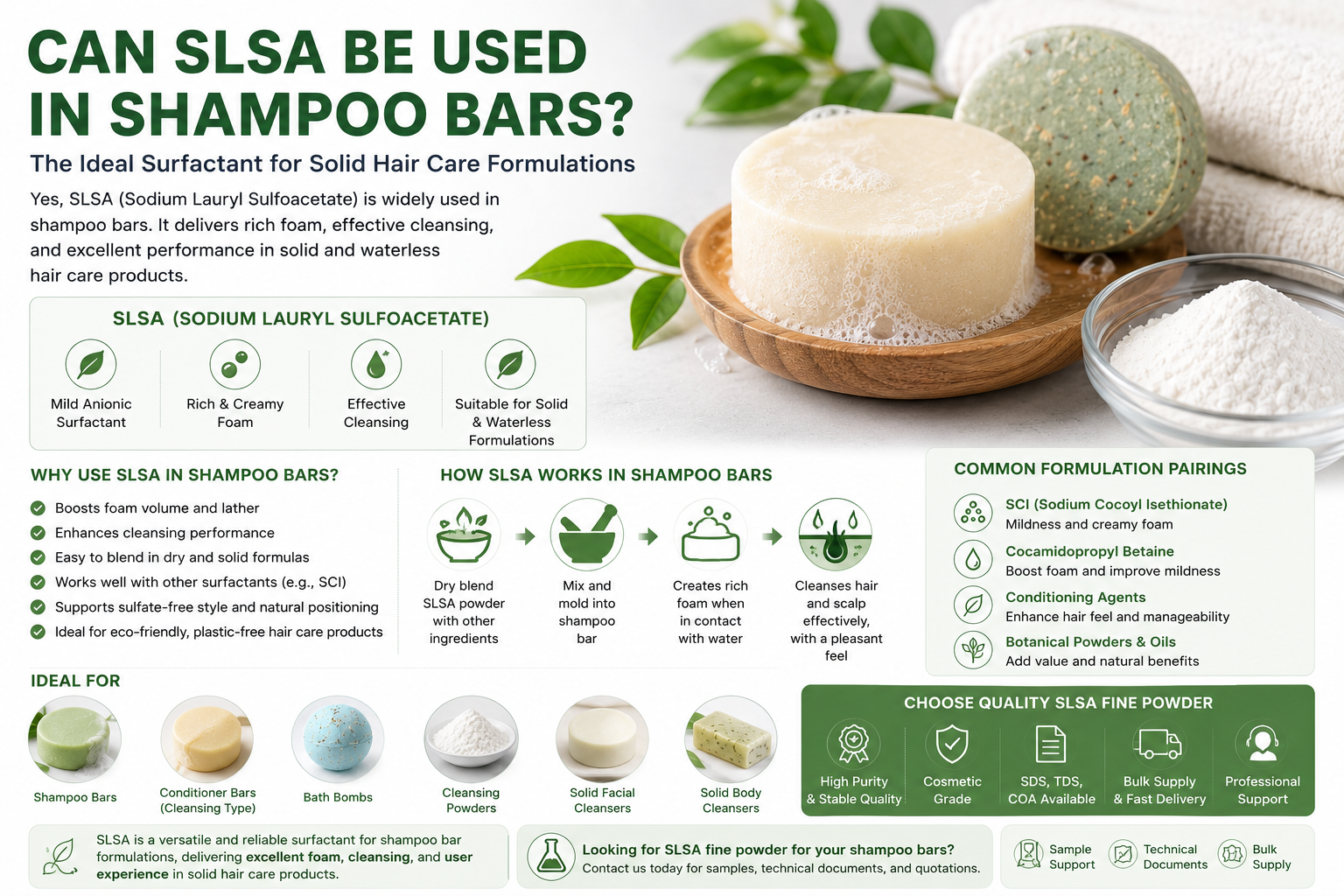
SLSA for Shampoo Bars
Shampoo bars are one of the fastest-growing solid personal care formats. SLSA is often used in shampoo bars because it provides rich foam and helps improve cleansing performance.
For shampoo bar manufacturers, SLSA supports:
- Rich lather
- Good cleansing performance
- Solid bar formulation
- Waterless product positioning
- Reduced packaging concepts
- Sulfate-free-style product claims
SLSA for Bath Bombs
SLSA is widely used in bath bombs because it helps create foam and improves the bath experience. Fine powder SLSA is especially suitable for dry blending with baking soda, citric acid, starch, clays, colors, fragrances, and oils.
For bath bomb manufacturers, SLSA supports:
- Foaming bath bombs
- Bubble bath bombs
- Luxury bath products
- Dry blending production
- Premium bath product positioning
SLSA for Cleansing Powders
Cleansing powders and powder-to-foam cleansers are suitable for travel-friendly and waterless beauty concepts. SLSA fine powder can be blended into dry powder systems and activated with water during use.
For cleansing powder brands, SLSA supports:
- Powder-to-foam texture
- Lightweight packaging
- Concentrated formulas
- Waterless beauty positioning
- Mild cleansing concepts
Does SLSA Break Down in Water?
SLSA is generally considered biodegradable in aqueous environments under suitable conditions. This is relevant because SLSA is mostly used in rinse-off personal care products.
After use, rinse-off products such as shampoo bars, facial cleansers, and bath products enter wastewater systems. A biodegradable surfactant is expected to break down more readily than persistent substances during wastewater treatment and environmental exposure.
However, the actual degradation behavior can depend on:
- Wastewater treatment conditions
- Microbial population
- Temperature
- Oxygen level
- Concentration
- Formula composition
- Presence of other ingredients
Therefore, for regulatory or customer documentation, it is better to support biodegradability claims with supplier statements or test data.
Is SLSA Safe for the Environment?
SLSA is often selected as an environmentally preferable surfactant compared with some less biodegradable or more persistent materials. However, “biodegradable” should not be confused with “completely risk-free.”
For responsible formulation, brands should consider:
- Recommended use level
- Finished product rinse-off behavior
- Aquatic toxicity data
- Local environmental regulations
- Wastewater treatment conditions
- Full formula assessment
- Packaging sustainability
- Ingredient sourcing
In other words, biodegradability is one important factor, but it is not the only factor in environmental safety.
A well-designed product should consider both ingredient selection and the full product lifecycle.
SLSA vs Other Surfactants: Environmental Positioning
Compared with many traditional surfactant systems, SLSA is often chosen for formulas that need a more modern environmental and consumer-facing image.
It is especially suitable when the product concept includes:
- Biodegradable surfactant
- Mild cleansing
- Solid shampoo bar
- Waterless beauty
- Bath bomb foam booster
- Powder-to-foam cleanser
- Sulfate-free-style positioning
- Natural-style personal care
- Eco-conscious bath products
However, the best surfactant choice depends on the full formulation, product format, cost target, and regulatory market.
FAQ: Is SLSA Biodegradable?
Is SLSA biodegradable?
Yes. Sodium Lauryl Sulfoacetate is generally regarded as biodegradable and is often described as readily biodegradable in technical and supplier documentation.
Is SLSA readily biodegradable?
SLSA is commonly described as readily biodegradable. For regulatory or customer approval, buyers should request a biodegradability statement or supporting technical documents from the supplier.
Is SLSA eco-friendly?
SLSA can support eco-conscious personal care formulations, especially in solid, powder-based, and waterless products. However, environmental impact should be evaluated based on the full formulation and product lifecycle.
Is SLSA suitable for shampoo bars?
Yes. SLSA fine powder is widely used in shampoo bars because it provides rich foam and works well in solid formulations.
Is SLSA suitable for bath bombs?
Yes. SLSA fine powder is commonly used in bath bombs and bubble bath powders to create foam.
Is SLSA natural?
SLSA may be described as naturally derived or plant-derived depending on the supplier and raw material source. Buyers should confirm supported claims with supplier documentation.
Is biodegradable the same as sulfate-free?
No. Biodegradable refers to environmental degradation behavior, while sulfate-free refers to ingredient structure and formulation claims.
What documents should I request when buying SLSA?
You should request SDS, TDS, COA, product specification, and biodegradability statement if required.
Buy Biodegradable SLSA Fine Powder from Hubei Tanmu Biotech
Hubei Tanmu Biotech supplies Sodium Lauryl Sulfoacetate fine powder for personal care and cosmetic applications.
Our SLSA is suitable for:
- Shampoo bars
- Bath bombs
- Bubble bath powders
- Foaming bath salts
- Cleansing powders
- Solid facial cleansers
- Waterless personal care products
We support B2B customers with:
- SLSA fine powder supply
- Bulk Sodium Lauryl Sulfoacetate
- Cosmetic-grade surfactant supply
- SDS
- TDS
- COA
- Product specification
- Sample support
- Export packaging
- Long-term supply cooperation
If you are looking for a reliable SLSA manufacturer, Sodium Lauryl Sulfoacetate supplier, or bulk SLSA fine powder source, contact Hubei Tanmu Biotech for samples, technical documents, and quotation.
Contact Us
Looking for biodegradable SLSA fine powder for your shampoo bar, bath bomb, cleansing powder, or waterless personal care formulation?
Contact Hubei Tanmu Biotech to request:
- SLSA sample
- SLSA quotation
- SDS / TDS / COA
- Product specification
- Biodegradability statement if required
- Bulk order information
- Distributor cooperation details
Product: Sodium Lauryl Sulfoacetate
Form: Fine powder
Applications: Shampoo bars, bath bombs, cleansing powders, facial cleansers, bubble bath products
Supply Type: Manufacturer direct supply
Contact us today to discuss your SLSA sourcing needs.



 Sales Manager
 Sales Manager