SLSA for Shampoo Bars
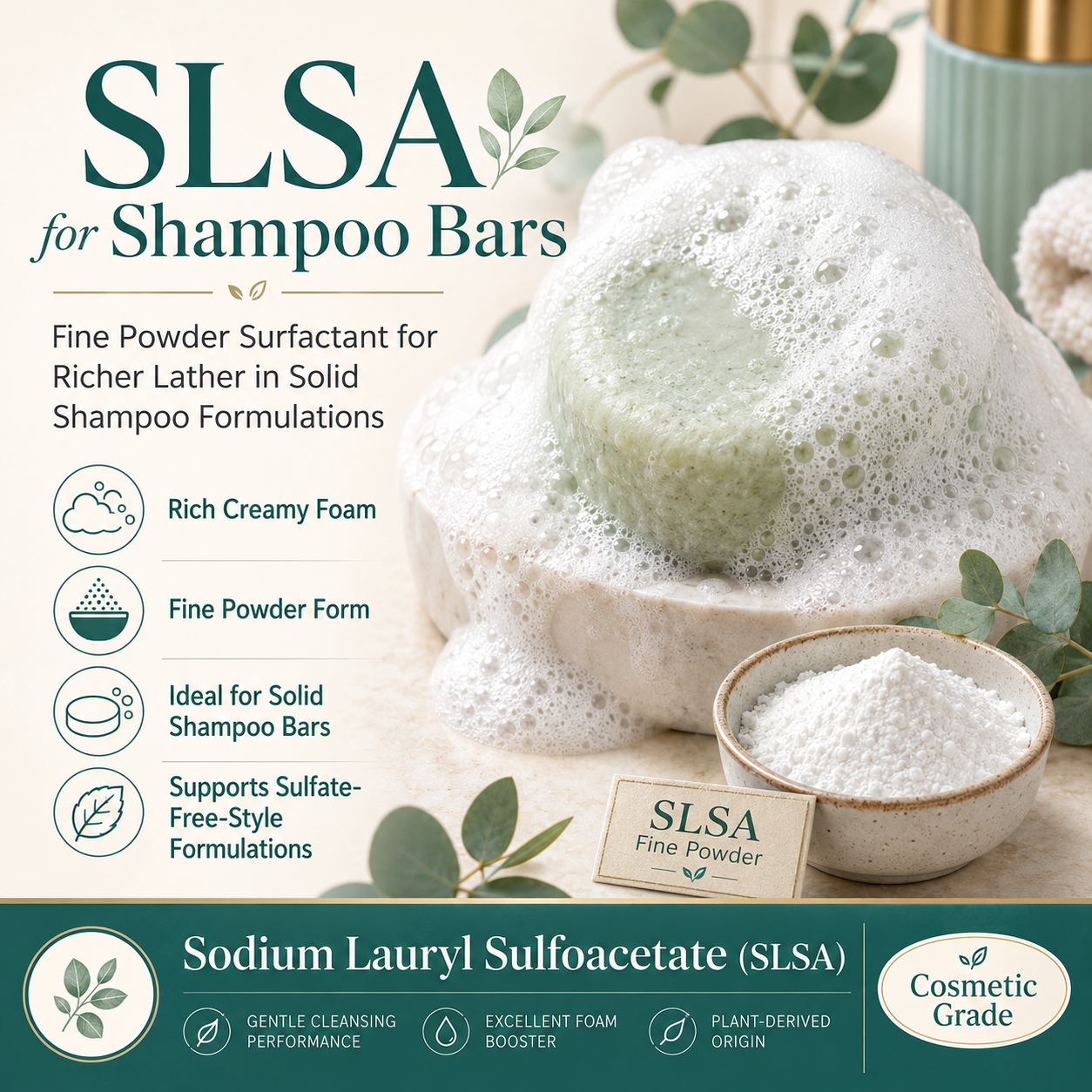
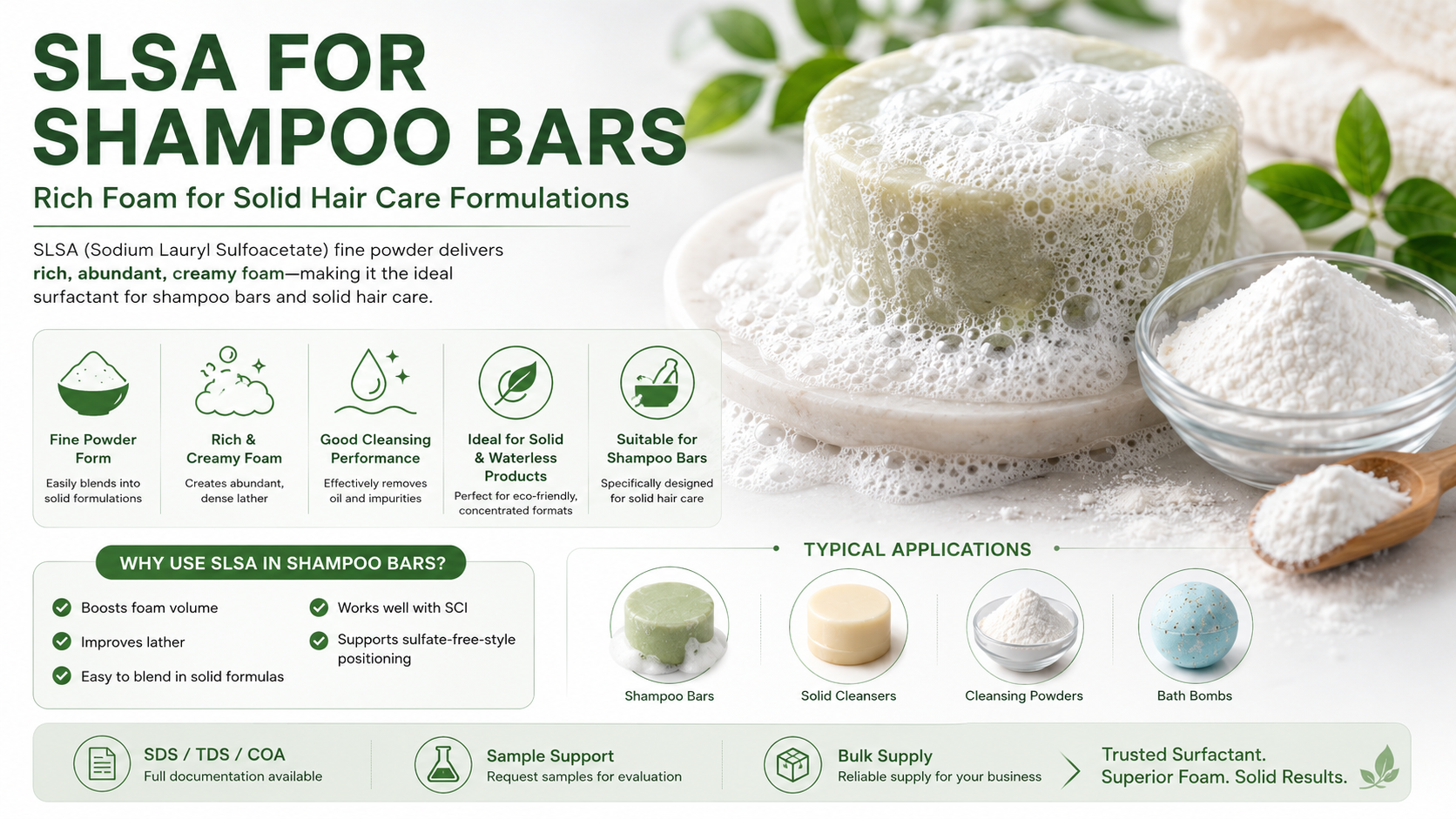
SLSA, also known as Sodium Lauryl Sulfoacetate, is a high-foaming anionic surfactant widely used in solid personal care formulations. In shampoo bars, SLSA helps create rich foam, improves cleansing performance, and supports a pleasant washing experience.
For brands developing solid shampoo bars, waterless hair care products, or sulfate-free-style cleansing systems, SLSA fine powder is a practical surfactant choice.
Hubei Tanmu Biotech supplies Sodium Lauryl Sulfoacetate fine powder for shampoo bar manufacturers, cosmetic OEM factories, private label brands, formulation laboratories, and personal care ingredient distributors.
Why Use SLSA in Shampoo Bars?
Shampoo bars need to perform well in several areas: foam, cleansing, hardness, rinsability, and hair feel. A good shampoo bar should lather easily, spread smoothly through the hair, rinse cleanly, and leave the scalp feeling fresh.
SLSA is used in shampoo bars because it can help improve:
- Rich and creamy lather
- Fast foam generation
- Effective cleansing performance
- Better product spreadability
- Solid bar formulation flexibility
- Consumer washing experience
- Sulfate-free-style product positioning
- Compatibility with waterless personal care concepts
For shampoo bar brands, foam is especially important. Consumers often judge a shampoo bar by how quickly it creates lather and how easy it is to use during washing.
Key Benefits of SLSA in Shampoo Bars
1. Rich Foam and Creamy Lather
SLSA is valued for its strong foaming ability. In shampoo bars, it helps create rich foam and a creamy lather that improves the user experience.
A shampoo bar with good foam is easier to apply, easier to spread through hair, and more familiar to consumers who are used to liquid shampoo.
2. Good Cleansing Performance
SLSA helps remove oil, dirt, and impurities from the hair and scalp. It supports effective cleansing while allowing formulators to build a more balanced surfactant system.
For shampoo bars, cleansing performance should be strong enough to clean the hair, but not so strong that the scalp feels dry or uncomfortable. SLSA can be used with other surfactants to help achieve this balance.
3. Suitable for Solid Shampoo Bar Formulations
SLSA fine powder can be blended into solid shampoo bar systems. It works well in formulations that contain surfactants, binders, oils, butters, clays, starches, botanical powders, conditioning agents, and fragrances.
This makes SLSA suitable for:
- Pressed shampoo bars
- Syndet shampoo bars
- Waterless shampoo bars
- Travel-size shampoo bars
- Solid hair cleansing bars
- Sulfate-free-style shampoo bars
4. Works Well with Other Mild Surfactants
SLSA is often used together with other surfactants to improve the final performance of shampoo bars.
Common formulation pairings include:
- SLSA + SCI
- SLSA + Sodium Cocoyl Isethionate
- SLSA + amino acid surfactants
- SLSA + amphoteric surfactants
- SLSA + nonionic co-surfactants
A blended surfactant system can help improve foam quality, mildness, rinsability, and hair feel.
5. Supports Waterless and Plastic-Free Product Concepts
Shampoo bars are part of the growing waterless beauty and solid personal care trend. Compared with traditional liquid shampoo, shampoo bars can reduce water content, support compact packaging, and fit eco-conscious personal care positioning.
SLSA fine powder is suitable for this product direction because it works well in dry and solid formats.
SLSA Fine Powder for Shampoo Bar Manufacturing
For commercial shampoo bar production, raw material consistency is very important. Differences in powder appearance, moisture, odor, or active matter may affect processing, foam, texture, and finished product quality.
Hubei Tanmu Biotech supplies SLSA fine powder for B2B customers who require stable quality and repeatable production performance.
Our SLSA fine powder is suitable for:
- Shampoo bar production
- Solid hair care formulations
- Cleansing bar manufacturing
- Cosmetic OEM production
- Private label personal care projects
- Formulation lab testing
- Ingredient distribution
SLSA vs SCI in Shampoo Bars
SLSA and SCI are both widely used in shampoo bars, but they play different roles.
| Item |
SLSA |
SCI |
| Full Name |
Sodium Lauryl Sulfoacetate |
Sodium Cocoyl Isethionate |
| Main Role |
Foam booster and cleansing surfactant |
Mild primary surfactant and creamy foam builder |
| Product Form |
Fine powder |
Powder, noodle, flake, or other forms depending on grade |
| Foam Character |
Rich, abundant foam |
Creamy, dense foam |
| Typical Use |
Shampoo bars, bath bombs, cleansing powders |
Shampoo bars, facial bars, body bars |
| Formulation Value |
Improves foam volume and cleansing performance |
Builds mildness and creamy texture |
Many shampoo bar formulas use SLSA and SCI together. SCI can provide a mild and creamy surfactant base, while SLSA can improve lather volume and cleansing performance.
Is SLSA Suitable for Sulfate-Free Shampoo Bars?
SLSA is Sodium Lauryl Sulfoacetate, not Sodium Lauryl Sulfate. It is commonly used in sulfate-free-style shampoo bar formulations.
However, finished product claims should always be reviewed based on the full formula and the regulations of the target market. If a brand wants to make a “sulfate-free” claim, it should confirm the complete ingredient list, local requirements, and retailer standards.
Formulation Considerations for SLSA Shampoo Bars
When using SLSA in shampoo bars, formulators should evaluate the complete formula instead of focusing only on one ingredient.
Important factors include:
Surfactant Balance
SLSA should be used as part of a balanced surfactant system. Combining SLSA with other mild surfactants can help improve foam, mildness, and rinsability.
Bar Hardness
Shampoo bars must be hard enough to keep their shape during storage and use. Oils, butters, waxes, binders, starches, clays, and processing methods all affect bar hardness.
Foam Performance
Foam should be tested under real use conditions. Water temperature, water hardness, dosage, hair type, and formula composition can all affect lather.
Rinsability
A good shampoo bar should rinse cleanly without leaving a heavy residue on the hair.
Hair Feel
Conditioning agents, emollients, cationic ingredients, and suitable oils may be used to improve softness, combability, and after-wash feel.
pH Testing
The finished shampoo bar should be tested after dilution to confirm that the pH is suitable for hair and scalp use.
Dust Control
Because SLSA is a fine powder, manufacturers should use proper handling methods, dust control, and personal protective equipment during production.
Recommended Shampoo Bar Applications
SLSA fine powder can be evaluated in many shampoo bar concepts, including:
- Normal hair shampoo bars
- Oily hair shampoo bars
- Mild cleansing shampoo bars
- Clarifying shampoo bars
- Travel shampoo bars
- Waterless shampoo bars
- Sulfate-free-style shampoo bars
- Natural-style shampoo bars
- Private label shampoo bars
- Solid hair cleansing bars
The final formula should be adjusted according to hair type, target cleansing level, foam requirement, and brand positioning.
Why Choose Hubei Tanmu Biotech as Your SLSA Supplier?
Hubei Tanmu Biotech focuses on supplying Sodium Lauryl Sulfoacetate fine powder for personal care and cosmetic applications.
We support customers with:
- SLSA fine powder supply
- Cosmetic-grade surfactant supply
- Bulk Sodium Lauryl Sulfoacetate
- Stable batch quality
- SDS
- TDS
- COA
- Product specification
- Sample support
- Export packaging
- Long-term cooperation
- Factory-direct communication
For shampoo bar brands, cosmetic OEM factories, and ingredient distributors, a stable SLSA supplier can help reduce sourcing risk and support continuous production.
FAQ: SLSA for Shampoo Bars
Is SLSA suitable for shampoo bars?
Yes. SLSA is suitable for shampoo bars and is widely used to improve foam and cleansing performance in solid hair care formulations.
Why is SLSA used in shampoo bars?
SLSA is used because it helps create rich lather, supports cleansing performance, and works well in solid and powder-based formulations.
Is SLSA good for shampoo bar foam?
Yes. SLSA helps improve foam volume and lather quality in shampoo bars.
Can SLSA be used with SCI?
Yes. SLSA is often used with SCI to create a balanced shampoo bar surfactant system with rich foam and good cleansing performance.
Is SLSA the same as SLS?
No. SLSA is Sodium Lauryl Sulfoacetate, while SLS is Sodium Lauryl Sulfate. They are different ingredients.
What form of SLSA do you supply?
We supply Sodium Lauryl Sulfoacetate in fine powder form.
Can I request SLSA samples for shampoo bar testing?
Yes. Samples are recommended for formulation testing before bulk purchase.
What documents can you provide?
We can provide SDS, TDS, COA, and product specification for customer review.