Why Does SLSA Powder Make You Cough? Understanding “SLSA Cough” and How to Prevent It
Sodium Lauryl Sulfoacetate, commonly known as SLSA, is one of the most popular surfactants used in bath bombs, bubble bars, foaming bath salts, shampoo bars and powder cleansing products.
It is loved by formulators because it creates rich, creamy and long-lasting foam while supporting sulfate-free and mild cleansing concepts.
However, many DIY makers and bath product manufacturers experience one common problem during production:
“Why does SLSA powder make me cough?”
This problem is often called “SLSA cough” in the bath bomb and bubble bar community.
The good news is that this issue is usually not caused by skin toxicity. It is mainly caused by airborne fine powder dust during weighing, pouring and mixing.
What Is “SLSA Cough”?
SLSA cough refers to coughing, throat irritation or respiratory discomfort that happens when very fine SLSA powder becomes airborne and is accidentally inhaled during formulation.
This is especially common when working with:
- SLSA fine powder
- Dry bath bomb mixtures
- Bubble bar formulas
- Powder cleanser blends
- Open mixing bowls
- Fast pouring or high-speed mixing
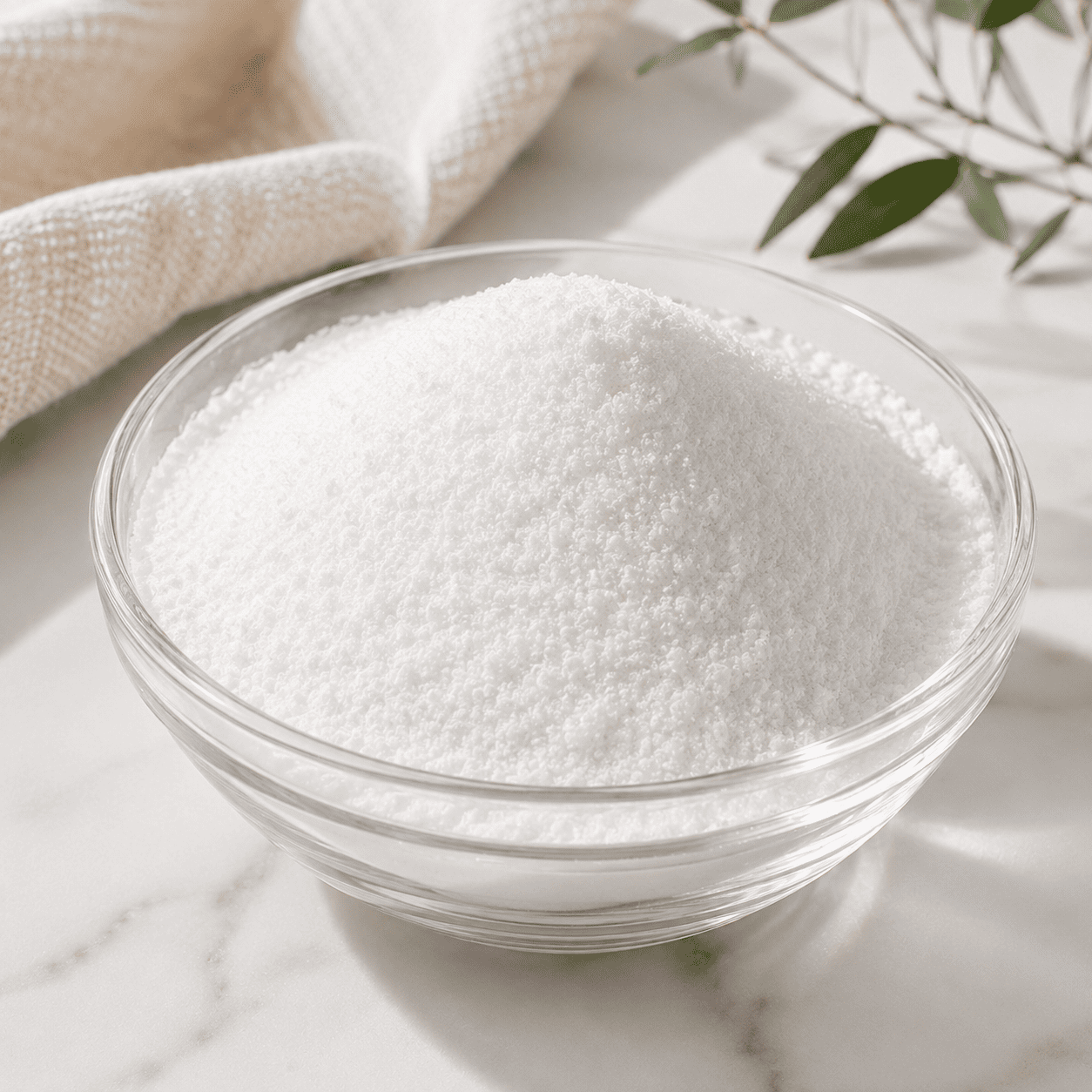
Fine SLSA powder is very lightweight. When it is poured or mixed, even a small air movement can cause the powder to float in the air.
Once inhaled, the airborne dust may irritate the throat, nose and respiratory tract, causing coughing.
Is SLSA Dangerous to the Skin?
SLSA is widely used as a mild anionic surfactant in personal care formulations. It is commonly selected for sulfate-free products because it can provide rich foam with better mildness than traditional harsh sulfates.
However, there is an important difference between:
- Skin exposure in a finished formulation
- Inhalation of airborne raw material dust during production
A finished bath bomb, shampoo bar or cleanser is very different from handling dry raw material powder directly.
SLSA can be suitable for mild cleansing products when properly formulated, but inhaling any fine surfactant powder dust is not recommended.
This is why good handling practices are important during production.
Why Does Fine SLSA Powder Cause Coughing?
Fine SLSA powder can make people cough mainly because of its small particle size and lightweight texture.
The finer the powder, the easier it becomes airborne.
When the powder floats in the air, it may enter the nose, throat or lungs during breathing. This can cause temporary irritation, especially in people who are sensitive to dust.
Main Reasons Fine SLSA Causes Coughing
- Very small particle size
Fine powder is more likely to become airborne.
- Lightweight powder structure
It can float easily during pouring or mixing.
- Dry blending process
Bath bombs and bubble bars often use dry mixing, which increases dust movement.
- Open workspace airflow
Fans, air conditioners or open windows can spread powder dust.
- Fast pouring or high-speed mixing
Quick movement increases airborne particles.
Is SLSA Cough More Common with Fine Powder?
Yes. SLSA cough is much more common when using SLSA fine powder.
Fine powder is useful for certain formulations because it disperses well and gives a smooth texture. However, it also has a higher dust risk.
This is why many bath bomb makers and dry blend manufacturers prefer SLSA coarse powder.
Fine SLSA Powder vs Coarse SLSA Powder
The main difference between fine SLSA and coarse SLSA is particle size.
| Comparison Item |
SLSA Fine Powder |
SLSA Coarse Powder |
| Particle Size |
Smaller |
Larger |
| Dust Level |
Higher |
Lower |
| Handling |
Needs more care |
Easier to handle |
| Best Use |
Shampoo bars, facial cleansers, powder cleansers |
Bath bombs, foaming bath salts, dry blends |
| Production Comfort |
More dust control needed |
Better for low-dust processing |
| Buyer Preference |
Formulation labs, smooth-texture products |
Bath bomb makers, OEM dry blending |
Both grades are Sodium Lauryl Sulfoacetate. The key difference is handling behavior.
Why Coarse SLSA Is Better for Bath Bombs
For bath bombs, bubble bars and foaming bath salts, coarse SLSA powder is often the better choice.
Bath bomb production usually involves dry blending ingredients such as:
- Baking soda
- Citric acid
- Starch
- Clay
- Salt
- Fragrance
- Colorants
- SLSA powder
Because the process is dry, dust control is very important.
Coarse SLSA can help reduce airborne dust during pouring and mixing. It is easier to weigh, transfer and blend in bulk production.
Benefits of Coarse SLSA for Bath Bombs
- Lower dust during mixing
- Easier handling in dry formulas
- Better production comfort
- Suitable for OEM and bulk manufacturing
- Helps reduce “SLSA cough” complaints
- Still creates rich, creamy foam in finished bath products
For many bath bomb manufacturers, coarse SLSA offers a better balance between foam performance and processing comfort.
When Should You Choose Fine SLSA Powder?
Fine SLSA powder is still useful in many formulations.
It may be preferred when the formulation requires a smoother texture or more uniform dispersion.
Fine SLSA Is Often Used In:
- Shampoo bars
- Facial cleansers
- Powder cleansers
- Pressed cleansing bars
- Smooth-texture formulations
- Formulation lab testing
Fine powder can help achieve more even blending, especially in refined personal care formulas. However, proper dust protection should always be used.
How to Prevent SLSA Cough During Production
If you work with SLSA powder, especially fine powder, good handling practice is essential.
Here are practical ways to reduce dust exposure.
1. Wear a Proper Particulate Mask
Always wear a fitted N95 mask or particulate respirator when handling dry SLSA powder.
A loose cotton mask is usually not enough to protect against fine airborne particles.
For regular production, workers should use proper respiratory protection according to local workplace safety requirements.
2. Wear Protective Goggles
Fine SLSA dust can also irritate the eyes.
Protective goggles help prevent airborne powder from entering the eyes during weighing and mixing.
This is especially important when working with open mixing containers.
3. Turn Off Fans and Air Conditioning
Air movement is one of the main reasons SLSA powder becomes airborne.
Before pouring or weighing SLSA, turn off:
- Fans
- Strong air conditioning
- Open-window airflow
- Direct ventilation blowing across the table
Keep the workspace calm and controlled.
4. Pour SLSA Slowly
Fast pouring creates more dust.
When adding SLSA to a formula, pour slowly and close to the mixing bowl or container surface.
Avoid dropping powder from a height.
A slow and low pouring method can significantly reduce dust clouds.
5. Use Coarse SLSA for Bath Bombs
If your main product is bath bombs, bubble bars or foaming bath salts, consider switching from fine powder to coarse SLSA.
Coarse SLSA has larger particles and is less likely to become airborne.
This is one of the easiest ways to reduce SLSA cough during dry blending.
6. Pre-Wet or Pre-Blend Carefully
Some makers reduce dust by carefully pre-blending SLSA with other dry ingredients or incorporating it slowly with oils or binders, depending on the formulation.
However, this must be tested carefully because bath bomb formulas are sensitive to moisture and ingredient balance.
Always test small batches before applying changes to full production.
7. Use Closed or Covered Mixing Equipment
For commercial production, closed mixing equipment can reduce airborne dust.
If fully closed equipment is not available, using a covered mixing system or dust-controlled transfer process can help.
This is especially useful for OEM factories and manufacturers handling SLSA in larger quantities.
8. Clean the Workspace Properly
After working with SLSA powder, avoid dry sweeping because it can make dust airborne again.
Instead, use:
- Damp wiping
- Controlled vacuum systems
- Proper surface cleaning
- Sealed waste disposal
Good cleanup practice helps reduce repeated dust exposure.
Best SLSA Grade by Application
| Application |
Recommended Grade |
Reason |
| Bath Bombs |
Coarse SLSA |
Lower dust and easier dry blending |
| Bubble Bars |
Coarse SLSA or Fine SLSA |
Depends on texture requirement |
| Foaming Bath Salts |
Coarse SLSA |
Better handling with granular materials |
| Shampoo Bars |
Fine SLSA |
Smooth blending and better dispersion |
| Facial Cleansers |
Fine SLSA |
Refined texture and uniform formula |
| Powder Cleansers |
Fine SLSA |
Better distribution in fine powder systems |
| OEM Bulk Production |
Coarse SLSA |
Lower dust and easier processing |
Does Coarse SLSA Still Create Rich Foam?
Yes. Coarse SLSA can still create rich and creamy foam when properly formulated.
The main difference is not the foam potential itself, but the production experience.
Fine SLSA may disperse faster in some systems, while coarse SLSA is easier to handle in dry blending.
For bath bombs and foaming bath products, coarse SLSA can still provide the luxurious foam customers expect.
Common Mistakes When Handling SLSA Powder
Mistake 1: Pouring Too Fast
Fast pouring creates dust clouds. Always pour slowly.
Mistake 2: Mixing Under a Fan
Airflow spreads fine powder quickly. Turn off fans before weighing.
Mistake 3: Using Fine SLSA for Every Application
Fine powder is not always the best choice. For bath bombs, coarse powder may be more practical.
Mistake 4: No Respiratory Protection
Even if SLSA is mild on skin, inhaling raw material dust should be avoided.
Mistake 5: Ignoring Worker Comfort
In commercial production, dust control affects worker comfort, production efficiency and long-term handling safety.
Buyer’s Guide: How to Choose Low-Dust SLSA
When sourcing SLSA powder, buyers should ask suppliers:
- Do you offer fine and coarse SLSA powder?
- Which grade is recommended for bath bombs?
- Can you provide samples for testing?
- What is the active matter content?
- What documents are available?
- Can you provide COA, TDS and SDS?
- What is the packing size?
- What is the MOQ and lead time?
For bath bomb and dry blend manufacturers, it is strongly recommended to test coarse SLSA before bulk purchasing.
Product Overview: SLSA from Hubei Tanmu Biotech
Hubei Tanmu Biotech supplies Sodium Lauryl Sulfoacetate SLSA powder for personal care manufacturers, bath bomb producers, shampoo bar brands and cosmetic OEM factories.
Product Information
| Item |
Description |
| Product Name |
Sodium Lauryl Sulfoacetate |
| Abbreviation |
SLSA |
| INCI Name |
Sodium Lauryl Sulfoacetate |
| CAS No. |
1847-58-1 |
| Appearance |
White fine powder / white coarse powder |
| Active Matter |
75% min |
| Packing |
25 kg/drum |
| Applications |
Bath bombs, shampoo bars, facial cleansers, foaming bath salts, powder cleansers |
| Documents |
COA, TDS, SDS available |
Why Choose Coarse SLSA from Tanmu Biotech?
Our coarse SLSA grade is suitable for manufacturers who need:
- Lower dust during dry blending
- Better handling in bath bomb production
- Rich foam performance
- Stable quality for bulk orders
- Fine and coarse grade options
- Factory-level supply support
- Technical documents for evaluation
If you are currently using fine SLSA and experiencing dust or coughing issues, testing coarse SLSA may help improve your production process.
Final Takeaway
“SLSA cough” is usually caused by airborne fine powder dust during handling, not by the finished product itself.
To reduce coughing and dust irritation:
- Wear a fitted particulate mask
- Use protective goggles
- Turn off fans and direct airflow
- Pour slowly
- Consider coarse SLSA for bath bombs and dry blends
For bath bomb makers and bulk dry blending factories, coarse SLSA powder is often the better choice because it offers lower dust and easier handling while still supporting rich, creamy foam.
Need Low-Dust SLSA for Bath Bombs or Bubble Bars?
Hubei Tanmu Biotech supplies SLSA Fine Powder and Coarse Powder for global personal care manufacturers.
Active Matter: 75% min
Packing: 25 kg/drum
Grade: Fine Powder / Coarse Powder
Application: Bath Bombs, Bubble Bars, Shampoo Bars, Facial Cleansers, Foaming Bath Salts
Documents: COA, TDS, SDS available
Contact us to request samples, technical documents or factory-level quotation.
Website: www.tanmubiotech.com
Email: [email protected]
FAQ: SLSA Cough and Dust Control
1. Why does SLSA powder make me cough?
SLSA powder can make you cough because fine powder particles become airborne during pouring or mixing. When inhaled, the dust may irritate the throat and respiratory tract.
2. Is SLSA cough dangerous?
SLSA cough is usually related to inhalation of airborne dust. Raw material dust should be avoided. Use proper protective equipment and improve dust control during production.
3. Is coarse SLSA better than fine SLSA for bath bombs?
Yes, coarse SLSA is often better for bath bombs because it creates less dust and is easier to handle in dry blending.
4. Does coarse SLSA still foam well?
Yes. Coarse SLSA can still create rich and creamy foam when properly formulated in bath bombs, bubble bars and foaming bath products.
5. Should I wear a mask when using SLSA?
Yes. A fitted N95 mask or particulate respirator is recommended when handling dry SLSA powder, especially fine powder.
6. How can I reduce SLSA dust?
Use coarse SLSA, pour slowly, turn off fans, wear protective equipment and use controlled mixing methods.
7. Which SLSA grade should I choose for shampoo bars?
Fine SLSA is usually preferred for shampoo bars because it disperses well and supports a smoother texture.
8. Which SLSA grade should I choose for bath bombs?
Coarse SLSA is usually preferred for bath bombs because it reduces airborne dust during dry mixing.



 Sales Manager
 Sales Manager