Il progetto dei formulatori per il sodio lauril solfoacetato (SLSA): Risoluzione clinica, Formulazione, e punti critici della catena di fornitura
Nel mercato altamente competitivo della cura personale, sviluppare un prodotto che ottenga un'etichetta priva di solfati pur mantenendo prestazioni di lusso è uno degli equilibri più difficili da raggiungere. I formulatori sono costantemente coinvolti in un fuoco incrociato tra i team di marketing che richiedono prodotti istantanei, schiuma flash esplosiva, e i tossicologi richiedono un trattamento ultra-leggero, profili non irritanti.
Mentre il sodio lauril solfoacetato (SLSA) è ampiamente celebrato come la principale soluzione a questo dilemma, lavorare con esso comporta sfide tecniche uniche. Dalla gestione della polvere nello stabilimento di produzione alla prevenzione degli aggregati, gestire la solubilità in acqua, e affrontare la volatilità dei fornitori globali, i formulatori devono affrontare ostacoli critici.
Questa guida tecnica affronta direttamente questi punti critici, fornire la termodinamica, strutturale, e le soluzioni pratiche di cui hai bisogno, introducendo al contempo la SLSA ingegnerizzata di TANMUBIOTECH come soluzione definitiva per le materie prime.
Punto dolente 1: L’equivoco sulla denominazione dei solfati
Come spiegare la sicurezza dell'SLSA ai team di regolamentazione e marketing
Il problema: Perché Sodium Lauryl Sulfoacetate contiene le parole Lauryl e Sulfo, comitati di regolamentazione, rivenditori di prodotti di bellezza pulita, e i consumatori spesso lo scambiano per sodio lauril solfato (SLS). Questo malinteso può ritardare l’approvazione dei prodotti e complicare le campagne di marketing.
-
Sodio lauril solfato (SLS): Ha un piccolo gruppo di teste polari. Penetra facilmente la barriera cutanea, denatura le proteine della pelle, e porta a irritazione e secchezza.
-
Sodio lauril solfoacetato (SLSA): Ha un volume ingombrante, gruppo di testa polare legato all'estere. L'impedimento sterico blocca la penetrazione cutanea, mantenendo la molecola in superficie per una detersione ultra delicata.
La soluzione scientifica: La chimica fisica delle due molecole è fondamentalmente diversa. SLS è un alchilsolfato con un piccolo, gruppo di testa altamente polare. Questa dimensione compatta gli consente di penetrare facilmente nel doppio strato lipidico dello strato corneo, dove denatura le proteine della pelle e provoca irritazione.
SLSA non è un solfato. È un solfoacetato – un tensioattivo organico legato a un estere. L'aggiunta del collegamento estere (scritto chimicamente come -CO-O-) e il gruppo acetato crea un volume ingombrante, gruppo di testa stericamente impedito (Formula chimica: C14H27NaO5S).
Questa massa molecolare rende la SLSA fisicamente troppo grande per penetrare negli spazi intercellulari della barriera cutanea. Deterge esclusivamente sulla superficie della pelle e dei capelli, spazzando via lo sporco e il sebo in eccesso, e si risciacqua completamente senza danneggiare la delicata barriera antiumidità.
Punto dolente 2: Pericoli legati alla produzione industriale (Il problema della spolverata)
Come gestire le polveri fini senza compromettere la sicurezza dell'impianto
Il problema: L'SLSA standard viene spesso fornito come ultrafine, polvere leggera. Durante la produzione su larga scala, lo scarico di questi sacchetti di polvere nei recipienti di miscelazione crea una quantità significativa di polvere nell'aria. Ciò comporta gravi rischi di inalazione per gli operatori della fabbrica, contaminazione incrociata in ambienti cleanroom, e spreco di materiale dovuto alla sospensione del prodotto nei sistemi di scarico.
-
Polvere convenzionale: Crea pericoli di inalazione nell'aria, richiede respiratori pesanti per gli operatori, e comporta un elevato spreco di materiale.
-
TANMUBIOTECH Grossolano: Polvere solida grossolana priva di polvere, garantisce un pavimento dell'impianto pulito e sicuro, e permette 100 percentuale di utilizzo attivo.
La soluzione TANMUBIOTECH: Per eliminare questo collo di bottiglia nella produzione, TANMUBIOTECH ha progettato la SLSA granulare grossolana.
Utilizzando avanzato, tecnologia di agglomerazione a bassa pressione termica, trasformiamo le molecole fini di SLSA in uniformi, granuli grossolani senza polvere. Questo formato ingegnerizzato elimina completamente la polvere aerodispersa (garantendo un servizio più sicuro, Ambiente conforme all'OSHA per gli operatori del vostro impianto), migliora la fluidità nei sistemi a tramoggia automatizzata, e previene la perdita di materia prima, garantendo 100 la percentuale del materiale acquistato finisce nella formulazione.
Punto dolente 3: Scarsa solubilità in acqua calda/fredda e formazione di grumi
Superare i colli di bottiglia della dissoluzione nella lavorazione a umido
Il problema: I formulatori spesso riferiscono che SLSA resiste alla rapida dissoluzione in acqua, spesso formando testardo, grumi simili a gel (fasi di cristalli liquidi) sul fondo dei recipienti di miscelazione. Ciò rallenta i tempi di batch, spreca energia attraverso il riscaldamento prolungato, e può portare a una concentrazione incoerente di sostanza attiva tra i lotti.
La soluzione scientifica: SLSA è altamente idrofobo a temperatura ambiente grazie alla sua lunga coda alchilica C12. Per ottenere una soluzione senza soluzione di continuità, soluzione uniforme senza degradazione termica di altri principi attivi, i formulatori devono comprenderne il punto Krafft (la temperatura alla quale la solubilità del tensioattivo aumenta rapidamente quando si formano le micelle).
Protocollo di dissoluzione ottimizzato
-
Preriscaldare l'acqua: Porta la tua fase acquosa a 65 a 70 gradi C prima di introdurre il tensioattivo. Questo livello di energia supera facilmente il confine di Krafft.
-
Aggiunta graduale: Setacciare lentamente la SLSA nel vortice dell'acqua sotto taglio moderato (evitare tagli elevati per evitare eccessivi, schiuma incontrollabile).
-
La scorciatoia per i polioli: Se la lavorazione a caldo non è un'opzione, pre-liquame della polvere SLSA in un supporto poliolo (come la glicerina o il glicole propilenico) all'a 1:1 rapporto. Il poliolo bagna le code idrofobe dell'SLSA, prevenendo la formazione di grumi e consentendo al tensioattivo di dissolversi rapidamente quando aggiunto all'acqua fredda.
Punto dolente 4: La prestazione contro. Il compromesso della mitezza
Come ottenere una schiuma esplosiva nelle formule senza solfati
Il problema: Molti ultra-leggeri, tensioattivi senza solfati (come i solfosuccinati o i glutammati) soffrono di scarsa schiuma flash. I consumatori si aspettano immediato, ricco, e schiuma stabile, soprattutto negli shampoo e nei lavaggi per il corpo. La sostituzione dei solfati spesso si traduce in un appartamento, esperienza sensoriale acquosa.
La soluzione scientifica: SLSA presenta naturalmente un'eccezionale schiuma flash, ma le sue prestazioni possono essere potenziate attraverso la termodinamica micellare.
Quando si combina la SLSA anionica con un co-tensioattivo anfotero, come Cocamidopropil Betaina (CAPB) o Coco Betaina, inneschi l'autoassemblaggio spontaneo di micelle miste.
Queste micelle miste che si impaccano sull'interfaccia liquido-aria riducono significativamente la concentrazione micellare critica (CMC) del tuo sistema. Questa sinergia produce:
-
Un istantaneo, imbottito, e struttura in schiuma ultra stabile.
-
Un profilo di irritazione drasticamente ridotto, poiché le micelle miste legano monomeri liberi che altrimenti interagirebbero con le proteine della pelle.
-
Proprietà di aumento della viscosità migliorate, riducendo la necessità di sale sintetico o addensanti per gomma.
Proteggi le tue formule e i tuoi margini oggi stesso
Non lasciare che la ristrutturazione del mercato, ritardi nella spedizione, e i costi crescenti compromettono il programma di produzione e i margini di profitto. Transizione verso un sistema resiliente, filiera ad alte prestazioni con TANMUBIOTECH.
Collabora con noi per la tua prossima prova. Contatta il nostro team tecnico-commerciale per ricevere un certificato di analisi (CoA), schede di sicurezza dei materiali (MSDS), o per ordinare il tuo kit campione gratuito.



 Guida del formulatore all'SLSA: Risolvere la solubilità, Spolverare & Problemi della catena di fornitura
 Rompere il paradosso del solfato: Perché SLSA ad elevata purezza è il futuro della pulizia delicata
 Oltre l'altezza della schiuma: Come scegliere la polvere SLSA di alta qualità per le formulazioni per la cura personale
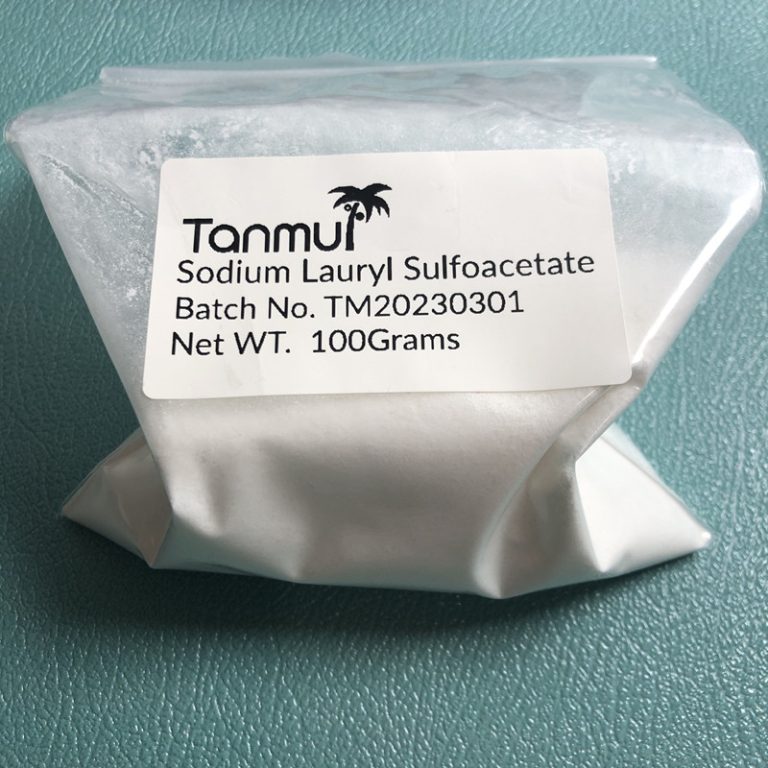 Sodio lauril solfoacetato (SLSA) – Tensioattivo delicato per formulazioni premium per la cura personale
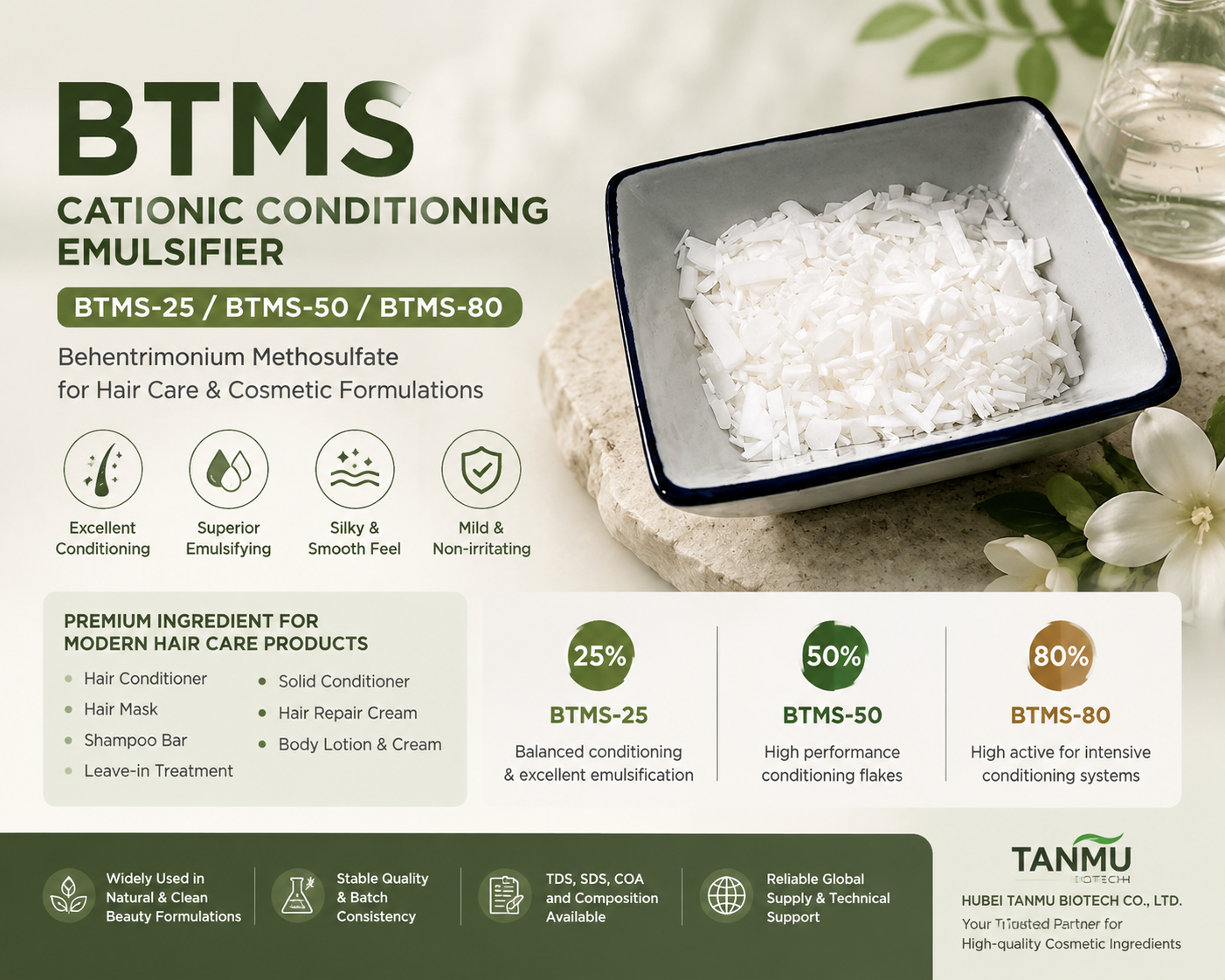 BTMS-25 / BTMS-50 / Fornitore di emulsionanti condizionanti cationici BTMS-80
 Direttore delle vendite
 Direttore delle vendite